
· by Michael Blair, Nashville's Siding
Siding tends to be replaced for appearance long before it has failed, or left long after the wall behind it has begun to suffer. A few signals separate the two.
When does siding need replacing?
Widespread rot or soft board, particularly low on walls and beneath windows. Repeated paint failure across whole elevations rather than in patches.
Panels that have become brittle and crack when flexed, or a wall plane that has waved because the sheathing behind has swollen.
When is a siding repair enough?
Localized damage from a discrete cause — impact, a specific leak, one rotten board under a failed gutter joint. Fading, chalking and dirt are cosmetic.
A handful of loose or unzipped vinyl panels is a repair, not a re-side.
- Widespread soft board: replace
- Localized damage with a known cause: repair
- Brittle, cracking panels: replace
- Fade and chalk only: wash or paint
- Wall plane waving: investigate the sheathing
The energy and insulation opportunity
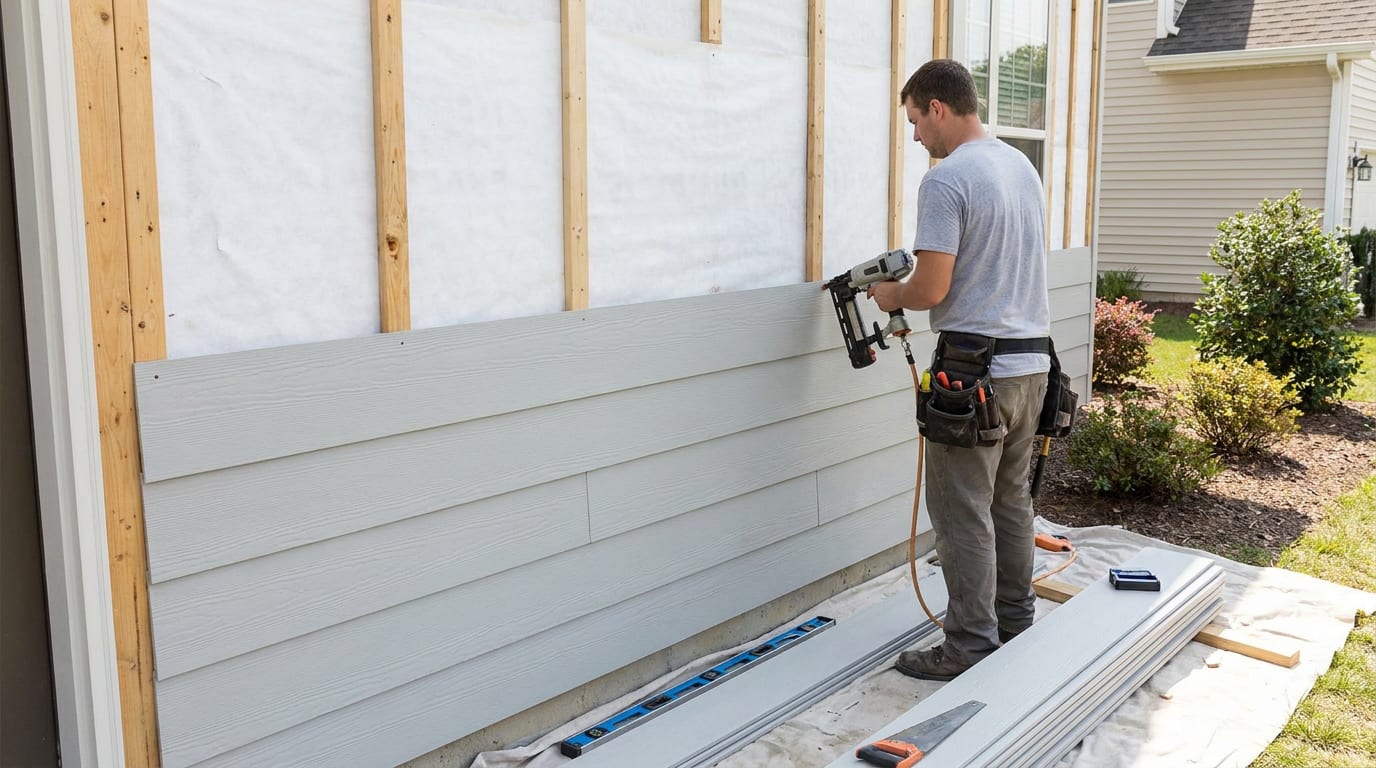
A re-side is the one moment when the wall is open from outside. Adding a continuous insulation layer or a rainscreen gap is cheap while the siding is off and expensive at any other time.
In Middle Tennessee, a drainage gap behind the siding is worth asking about — it lets the wall dry outward, which matters in our humidity.
Sequencing with other work
Windows before siding, always. Replacing windows after new siding means cutting into fresh work and compromising the flashing that was just installed.
Roof before siding as well, since roof-wall flashing is installed in a specific order and doing it out of sequence produces exactly the junction failures that cause rot.
FAQ
When Siding Is Actually Due for Replacement — questions
How long does siding last in Middle Tennessee?
Vinyl commonly gives twenty to forty years, fiber cement thirty to fifty, and wood anywhere from fifteen to a century depending entirely on maintenance. The number that matters more is the condition of the weather barrier and flashing behind it, which is usually what actually determines when a wall needs work.
Should I replace windows before or after siding?
Windows first, without exception. Window flashing has to integrate with the weather barrier and the siding above it, and doing windows afterwards means cutting into new siding and compromising details that were just installed correctly. Any contractor suggesting otherwise is scheduling for their own convenience.
Can I replace just one side of my house?
Yes, and it is common where one elevation has taken damage. The visible issue is matching — new material will not match weathered siding elsewhere. Replacing to a natural break such as a corner board makes the transition deliberate rather than looking like a patch.
Should you replace siding or the roof first?
Do the roof first. The flashing where a roof meets a wall has to go in a set order, and reversing the two jobs creates the junction leaks that rot walls. Windows go in before the siding as well, so their flashing ties into the new weather barrier rather than being cut into afterward.