
· by Michael Blair, Nashville's Siding
Siding is not waterproof and was never meant to be. Water gets behind it routinely, and what keeps the wall dry is the weather barrier and flashing underneath. When those are wrong, the siding looks fine for years while the sheathing goes.
Where does water get behind siding?
Around windows and doors, where flashing either directs water back out or does not. Missing or reversed head flashing over a window is the single most common defect.
Then at roof-to-wall junctions without a kick-out flashing, which sends a roof’s worth of runoff straight down inside the wall at one point.
Signs visible from outside
Paint failing repeatedly in one area regardless of repainting. Siding that is soft when pressed, particularly low on the wall and under windows.
Staining below a window corner, and a bulge or wave in the siding plane where sheathing has swollen and lost strength.
- Repeated paint failure in one spot
- Soft siding below windows or at the base
- Vertical stain lines below window corners
- A wave or bulge in an otherwise flat wall
- Fasteners backing out or rust bleeding through
Why does a missing kick-out flashing cause rot?
Where a roof edge meets a wall, water running down the roof needs to be kicked away from the wall into the gutter. A missing kick-out puts it behind the siding at that exact point.
The damage is concentrated and severe — often a rotted stud bay and sheathing behind apparently perfect siding. It is worth checking every roof-wall junction on the house.
What a proper repair involves
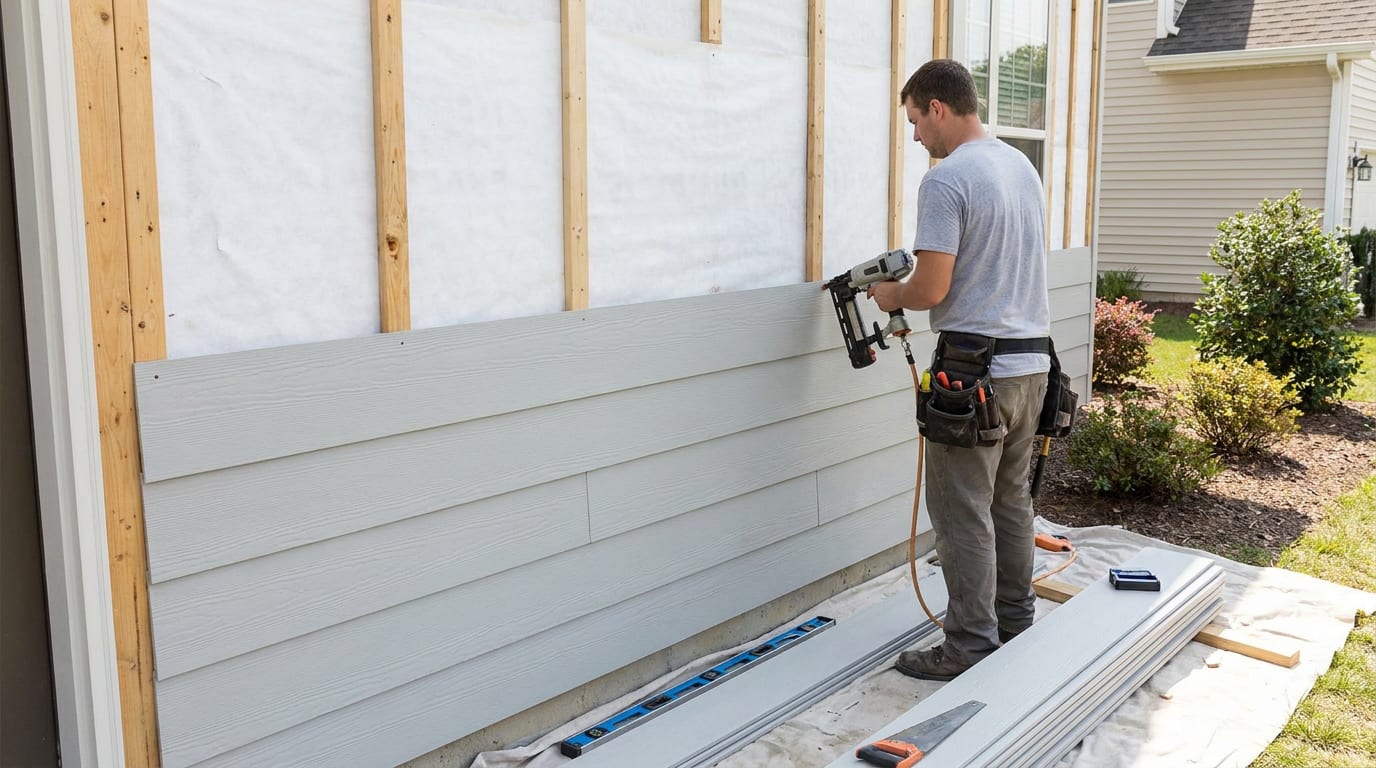
Opening the wall to sound material, replacing sheathing and framing as needed, then correcting the flashing and weather barrier before any siding goes back.
Siding replaced over the same defective detail rots again. If a quote does not mention flashing or house wrap, it is a cosmetic repair with a countdown on it.
FAQ
What Is Rotting Behind Your Siding — questions
How do I know if there is rot behind my siding?
Press firmly at the base of walls, under windows and at roof-wall junctions — soft or spongy areas indicate damage behind. Repeated paint failure in one location and staining below window corners are the other reliable outside signals. Confirming it means removing a small area of siding, which a contractor should be willing to do before quoting.
Does house wrap go behind all siding?
A water-resistive barrier is required behind siding in current code, and house wrap is the common form. Many older Nashville homes have felt paper or nothing at all. When siding comes off for replacement, installing a proper barrier and flashing is the part of the job that actually determines the outcome.
Can I just replace the rotten boards?
For localized damage from a discrete cause, yes, provided the cause is fixed at the same time. What does not work is replacing boards repeatedly in the same area — that pattern means water is still getting in, and each replacement buys a shorter interval than the last.
How do you replace rotted siding?
Open the wall back to sound material, replace the rotted sheathing and framing, then fix the flashing and weather barrier that let the water in before any new siding goes on. Swapping boards over the same faulty detail just starts the rot again, so a quote that never mentions flashing or house wrap is only cosmetic.