
· by Michael Blair, Nashville's Siding
LP SmartSide is engineered wood siding, and the company that makes it lists its address on West End Avenue here in Nashville. LP describes the board as wood made with binders and waxes, treated with zinc borate against termites and decay, and faced with a resin-saturated paper overlay. When owners search for problems with it, they are usually looking at one of a few things: board ends that have swollen at a joint, caulk that has split open, or a bottom course that has gone soft and dark.
Those symptoms tend to sit in the same places on the wall, and LP’s own technical bulletins explain why.
Why does LP SmartSide swell or rot?
It swells or rots where water reaches wood fiber that was left unprotected. The face of the board has a resin-saturated paper overlay and a factory primer; a field cut does not. LP’s Technical Bulletin 0001, its siding FAQ, says every exposed cut of siding and trim has to be sealed with paint or caulk, and that field cut ends at butt joints must be caulked whether or not they are painted. It also says lap siding and trim may not be ripped to a narrower width, because that leaves the ripped edge unprotected.
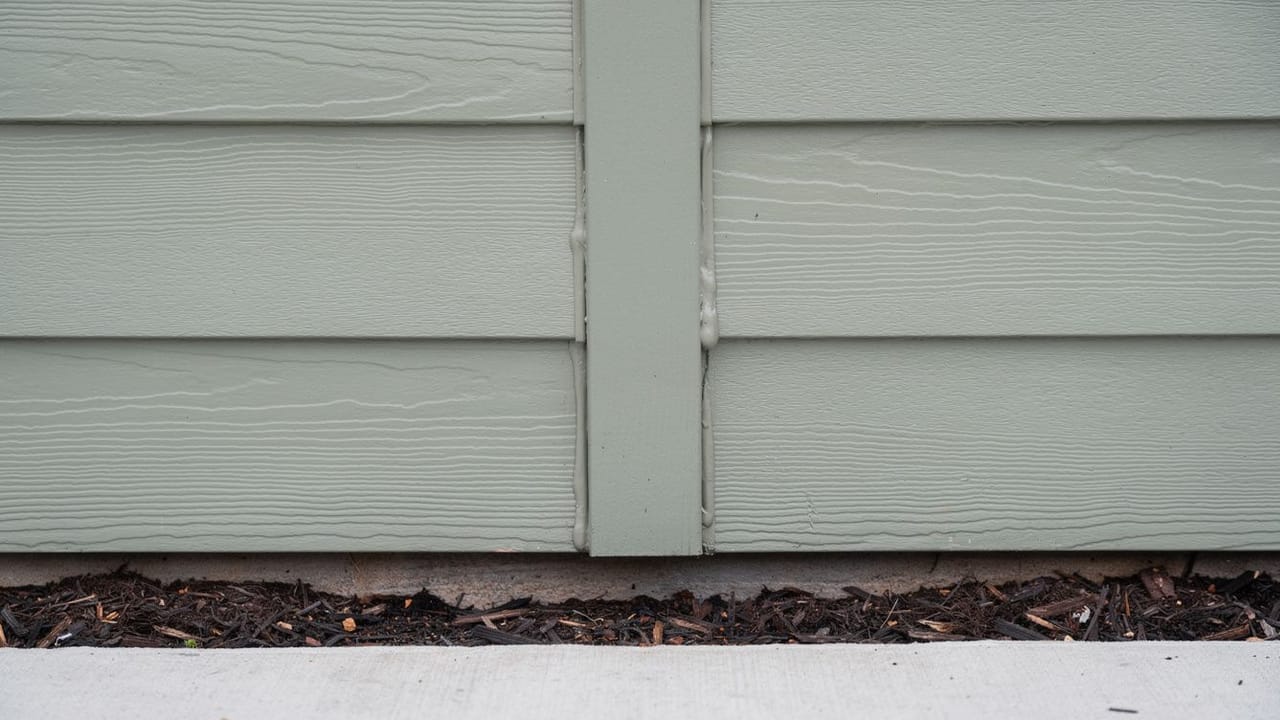
The other common source is the ground. The same bulletin says the siding is made for above-ground use and calls for at least 6 inches between the siding and the finish grade in the U.S. Mulch beds get topped up year after year, and a bottom course that started with clearance can end up sitting in wet mulch.
So when we see swelling, we look first at whether it lines up with joints, cuts around windows and trim, or the bottom of the wall. It usually does.
Which installation details does LP require?
LP requires a short list of details, and the residential code makes them binding. Section R703.3 of the 2024 International Residential Code as adopted in Nashville says wood-based siding is attached according to the code table and the wall covering manufacturer’s installation instructions, so LP’s instructions are part of what an inspector can hold the job to.
From LP’s siding FAQ and its butt joint bulletin, the details we check on every SmartSide wall are these:
- Every field cut sealed with paint or caulk; spray-applied coatings on cuts are not recommended.
- A 3/16-inch gap at caulked butt joints and where siding meets window trim or door casings.
- At least 6 inches between the bottom of the siding and the ground cover.
- Lap siding blind-nailed under the overlap, with any exposed nail heads sealed and kept sealed.
- Nail heads countersunk more than 1/16 inch caulked and painted.
- A finish coat of paint as soon as possible, and within 180 days of installation.
Can a tight butt joint be fixed without new siding?
Yes. LP publishes a repair for exactly that in its Technical Bulletin 003 on butt joint repair, written for joints installed without the required 3/16-inch gap. The board above is wedged out, a strip of metal flashing goes behind the joint to protect the weather barrier, and a fine-tooth saw trims one end back to open the gap.
The cut ends are then sanded smooth, cleaned, primed by brush with a 100% acrylic exterior primer, sealed with a non-hardening paintable sealant meeting ASTM C920 Class 25 or better, and finish-painted. If a board has been pushed away from the wall, the bulletin allows face-nailing just that area to pull it flat, with the nail heads painted.
Where the swelling has gone past the joint and the board is soft, that piece is replaced instead. Our siding repair work does both, and the same sealing rules apply to every replacement board we cut.
Paint, caulk and the 180-day window
Primed SmartSide is not finished siding. LP’s FAQ says most SmartSide is sold primed only, that the finish coat should go on as soon as possible and within 180 days, and that caulk should go on as soon as possible too. It recommends exterior 100% acrylic paint made for wood and engineered wood, and says transparent and semi-transparent stains give too little protection.
A house that sat primed through a summer, or a wall that was patched and never painted, is where we expect to find trouble. Siding with a factory finish from LP or a third-party prefinisher follows that company’s touch-up rules instead, which the FAQ points owners toward.
If you are weighing SmartSide against fiber cement for a new wall, our LP SmartSide and wood page covers how we install it. We work across the area, including siding in Clarksville, and our post on repairing rotted wood siding covers solid wood. If you have swollen ends or open joints, send us photos of the wall with one showing the bottom course.
Sources
- LP Building Solutions, LP SmartSide Technical Bulletin 0001, Frequently Asked Questions – Siding (revised November 2026) — Seal all exposed cuts; field-cut butt joint ends must be caulked; no ripping of lap siding or trim; 6-inch clearance to finish grade in the U.S.; blind nailing and sealing exposed heads; caulk heads countersunk more than 1/16 inch; finish coat within 180 days; 100% acrylic paint; most SmartSide sold primed only.
- LP Building Solutions, LP SmartSide Technical Bulletin 003, Lap Siding Butt Joint Repair — Minimum 3/16-inch gap at caulked butt joints and at trim; repair by wedging, flashing behind, trimming, sanding, priming, sealing with ASTM C920 Class 25 sealant and painting.
- 2024 International Residential Code, Chapter 7 Wall Covering, as published for Nashville by UpCodes — R703.3: wood, hardboard and wood structural panel siding installed per Table R703.3(1) and the wall covering manufacturer’s installation instructions; R703.1.1 and R703.2 water-resistive barrier (third-party code viewer).
FAQ
LP SmartSide Problems and Where They Start — questions
Does LP SmartSide need to be painted after install?
Yes, unless it came prefinished. LP says most SmartSide is sold primed only and that the finish coat should go on as soon as possible, within 180 days of installation. It recommends exterior 100% acrylic paint formulated for wood and engineered wood, and advises against transparent or semi-transparent stains.
Can LP SmartSide touch the ground?
No. LP’s siding FAQ says SmartSide is made for above-ground use and requires at least 6 inches of clearance between the siding and the finish grade or ground cover in the U.S. Mulch, soil and gravel that build up against the bottom course over the years close that gap and keep the edge wet.
Can you rip LP SmartSide lap siding?
Not according to LP. Its siding FAQ says ripping lap siding or trim to a smaller size leaves the ripped edge unprotected, and the limited warranty excludes alterations beyond what the application instructions allow. Ordinary cross cuts are fine, but every cut that will see weather has to be sealed with paint or caulk.
Should nail heads on LP SmartSide be caulked?
Only some. LP says nail heads that sit snug or flush on primed siding do not need caulk, but heads countersunk more than 1/16 inch should be caulked and painted. Face-nailed lap siding is a separate case: exposed heads must be sealed and checked regularly so the sealant keeps protecting them.
How big a gap does LP SmartSide need at butt joints?
LP calls for a minimum 3/16-inch gap at caulked butt joints and where siding meets window trim or door casings, then sealing the gap. Its Technical Bulletin 003 describes how to cut a tight joint open to that width, prime the ends, and seal it with an ASTM C920 sealant.