
· by Michael Blair, Nashville's Siding
The pattern is distinctive: a band of vinyl siding on one wall has rippled, sagged or taken on a glossy, distorted look, and the siding above and below it is untouched. Homeowners assume a defective batch or a bad install. It is nearly always heat, concentrated on that spot from somewhere nearby, and the source is often a window on the house next door. Once you know what to look for, the cause is usually visible from the damaged wall.
The window across the way
Modern low-E double-pane windows reflect a large share of the sun’s infrared energy, which is the whole point of them. When the outer pane bows slightly inward, which happens as the sealed air space between the panes changes pressure with temperature, the window becomes a shallow concave mirror. It focuses reflected sunlight into a bright band that sweeps across whatever is opposite as the sun moves, and vinyl in that band gets hot enough to distort.
The tell is the shape: a band or an oval, on the wall facing a window across a side yard, usually within a few dozen feet, and damage worst at the times of year and day when the sun angle lines up. Stand at the damaged siding in the afternoon and look for the window; you will often see the bright reflection on the wall.
The other heat sources
A gas grill parked against the house does the same thing, more locally: a scorched or melted area at grill height, often with soot. Dark trash cans, a black car parked close in summer, a dryer vent that blows hot air across the siding, a landscape light fixture, and a poorly placed heat pump discharge can all leave a warped patch.
Dark siding colors run hotter than light ones and distort at a lower reflected load, which is why the newer dark grays and blacks in vinyl come in heat-resistant formulations and why the warranty on some colors is specific about it.
- Concave reflection from a low-E window across the yard
- A grill, fire pit or smoker used close to the wall
- Dryer or heat pump exhaust blowing on the siding
- Dark siding on a south or west wall with a reflective surface opposite
Stopping it before repairing it
Replacing the damaged panels without removing the heat source gets the same panels melted again within a season. If the source is a neighbor’s window, the practical fix is on their side of the fence: a screen on that window breaks up the reflection almost completely, and most neighbors are willing once they see the damage. An awning, a shade tree, a fence panel or a well-placed shrub between the window and your wall also works.
For grills and vents, move them. A grill should sit well clear of any siding, and a dryer vent that blows against the wall can be fitted with a hood that directs it away.
Repairing the wall
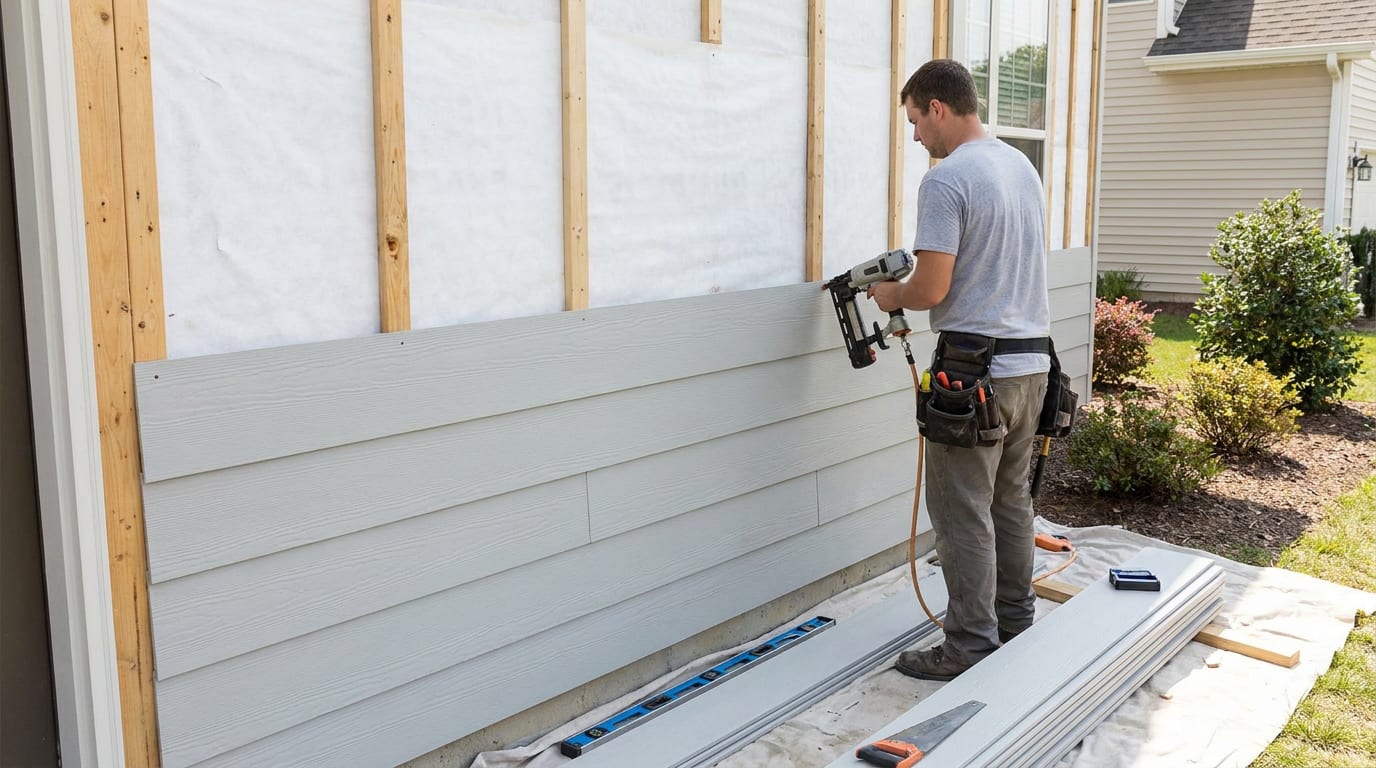
Distorted vinyl does not recover; the affected courses have to be unzipped and replaced. Matching is the hard part, because siding fades and a manufacturer’s color changes over the years, so the new panels can show even on a wall that is otherwise fine. Taking replacement panels from an inconspicuous wall and putting new ones there instead is the usual trick.
On a wall that has been hit repeatedly or where the source cannot be removed, replace those courses with a heat-resistant vinyl formulation, or with fiber cement, which does not care about reflected heat. Whatever goes back on, look behind the damaged panels while they are off; concentrated heat can also degrade the house wrap and foam behind them.